REPLACE · BUSINESS SYSTEMS & AUTOMATION
Replace the system everyone depends on—but nobody wants to touch.
An old system is not only old code. It contains data, exceptions, habits, responsibilities, and business rules. We map those realities before proposing a replacement.
“Our internal ordering system is fifteen years old and no longer fits how the business works.”
CONNECTED SYSTEM VIEW
Modernize in stages, with a visible way back.
The useful system is the whole path: trigger, software, data, decision points, outcome, and a way to recover.
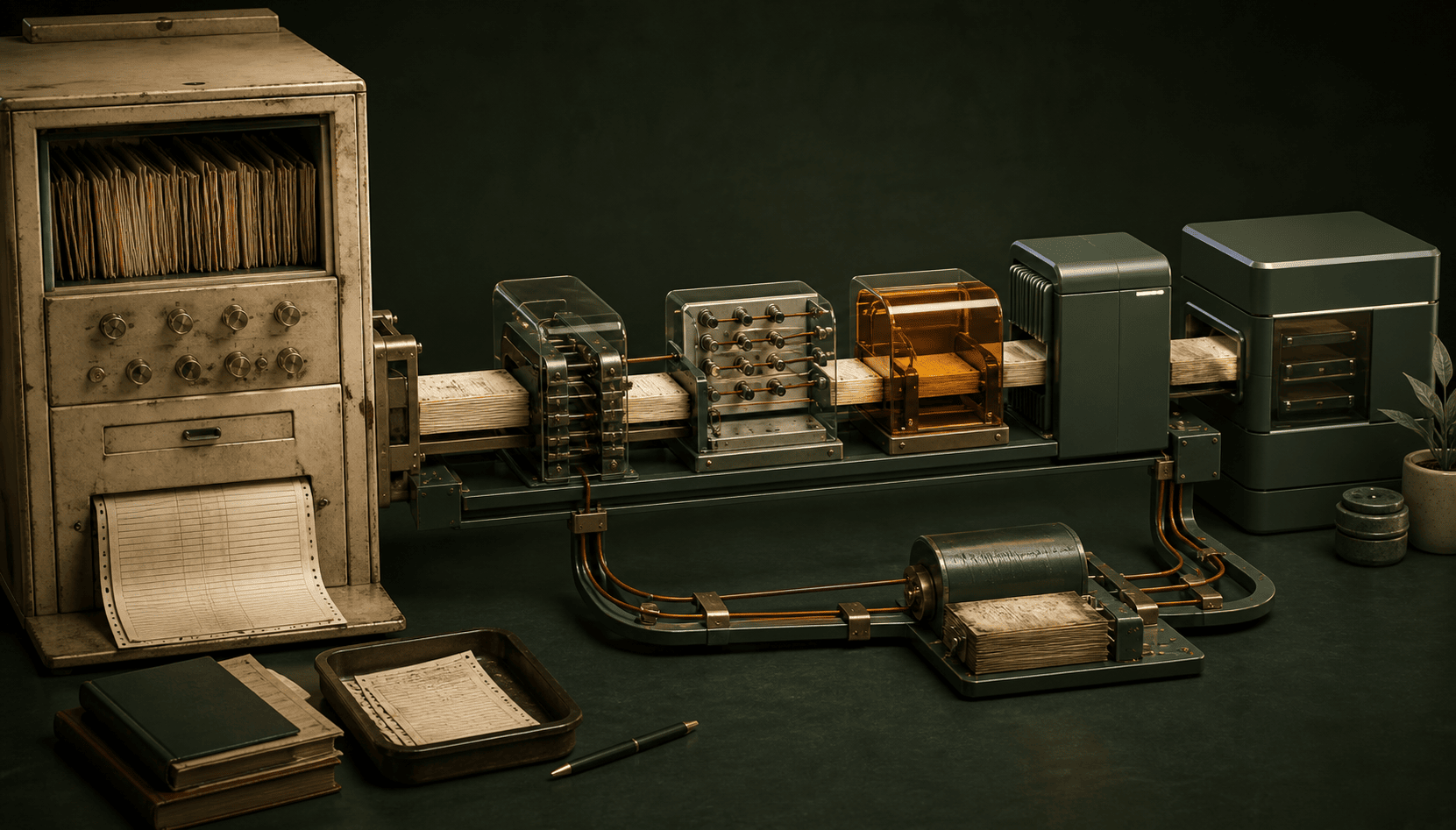
- 01Read-only source
- 02Mapping
- 03Validation
- 04Owner review
- 05New system
- 06Rollback
POSSIBLE OUTCOMES
A bounded system—not an open-ended transformation.
- Legacy system replacement
- Internal applications
- Process and interface redesign
- Staged data migration
FROM REQUIREMENT TO OPERATION
What the work can include.
- 01
Discover
Map users, workflows, data, integrations, hidden rules, and failure risks.
- 02
Design
Choose what to preserve, replace, simplify, integrate, or retire.
- 03
Migrate
Build and validate the new system with representative data and a staged cutover.
- 04
Operate
Monitor the production system, support users, and improve it without losing the rollback path.
WHY ORKESTR
Staged modernization around a working business.
The right modernization path may replace the application or preserve a stable core while adding a new interface, integration, or automated layer around it.
BOUNDARIES
What Discovery must establish.
- Migration scope and data quality must be inspected before a fixed implementation promise.
- Production access, backups, retention, and cutover approval stay explicit.
- A discovery phase can recommend staged improvement instead of full replacement.
Frequently asked questions
Does modernization mean replacing the whole system?
The right modernization path may replace the application or preserve a stable core while adding a new interface, integration, or automated layer around it.
How is data migration planned?
Build and validate the new system with representative data and a staged cutover.
Migration scope and data quality must be inspected before a fixed implementation promise.
How are production access and cutover handled?
Production access, backups, retention, and cutover approval stay explicit.
Monitor the production system, support users, and improve it without losing the rollback path.
PROJECT DISCOVERY